
Reading Never Came Easy
Growing up with dyslexia, reading was never my thing. In fact, the only time I really picked up a book was for school homework — and even then, it felt like torture. Whenever I raised concerns about how much I struggled to read, I was usually told to “try harder.” That was it. No real explanation, no real support.
I wasn’t diagnosed with dyslexia until I got to university. So for years, I’ll be honest, I thought there was something wrong with me.
Hiding the Struggle
When you’re the kid — or even the teenager — in the room who doesn’t know how to read a word, the last thing you want to do is admit it. You don’t want to be singled out, embarrassed, or pitied. So you develop a survival skill: memory.
I got very good at remembering things so I didn’t have to ask twice. If I saw a word once and someone explained it, I made damn sure it stuck. That’s probably the only upside of growing up like that — you sharpen your memory because you don’t want to be “that kid.”
And I know I can’t be the only person who’s ever felt that way. If you’re reading this and it sounds familiar: there is help out there. You just have to know where to look for it.
Books Took a Back Seat
My parents would have happily read to me, but I wasn’t interested. I was more of a film and video game person — because those things involved doing. Reading meant sitting still, staring at words that fought against me. And that felt like punishment, not fun.
Even when I got to uni, things didn’t change much. Yes, the technology had moved on by then — I had software that could read my textbooks out loud — but I still didn’t pick up a book “just for fun.” Reading for pleasure wasn’t part of my world.
The Covid Turning Point
This might sound like a shocking revelation, but I didn’t really start reading for enjoyment until Covid. During lockdown, I burned through my backlog of PlayStation games. And once the credits rolled on the last one, I was bored.
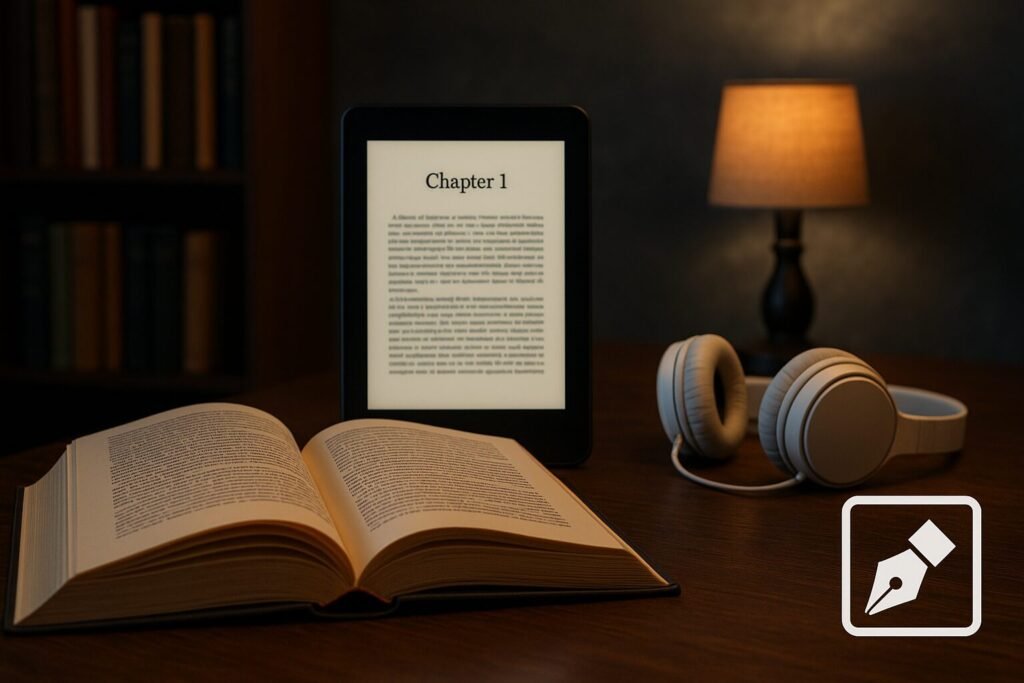
So, I started experimenting. I watched YouTube videos on how to get my iPad to read books to me, and suddenly a new door opened. Before I knew it, I was getting through three or four books a week. Everything from romantic dramas to thrillers. I even picked up titles that tried to tackle disability, like Jojo Moyes’ Me Before You — though I had plenty of thoughts about how those portrayals missed the mark. And then there were the big hitters: Clancy, Patterson, and beyond.
That’s when reading stopped being a chore and started becoming something else entirely: fuel.
The Stories That Hooked Me
The Jack Ryan novels were my entry point. Like a lot of people, I came to them through the films — Patriot Games, Clear and Present Danger, The Sum of All Fears. But once I knew those worlds existed, I wanted more.
Tom Clancy’s books were dense, detailed, political, and thrilling. They showed me how powerful story could be — both as entertainment and as a way of looking at the world differently.
But there was always something missing.
Spotting the Gap
As much as I enjoyed those stories, I never saw anyone like me in them. There were no disabled protagonists, no heroes who reflected the challenges I lived with.
That gap mattered. It made the stories exciting, but not personal. They were someone else’s adventures. And eventually, that gap became the reason I wanted to write.
Why My Stories Are Different
There are two main reasons I focus on disabled protagonists.
First, because there’s still a massive gap in the market. You don’t often see disabled leads in thrillers, romances, or even sci-fi. Second, because you write what you know. I can bring my own experiences to those characters and make them feel authentic — then drop them into whatever world the story demands: courtrooms, spy missions, political scandals, Formula One paddocks.
The books that made me want to write didn’t reflect me. But they gave me the spark. They taught me what stories could do — and they showed me exactly what was missing.
That’s where my writing lives now: in that gap.
Looking Ahead
I write the kind of books I always wanted to find — fast-paced, character-driven, full of tension — but with protagonists who feel real, grounded, and lived-in.
If that sounds like your kind of story, stick around. You can see what I’m working on right now over at CMeewrites.com. It’s only the beginning.