
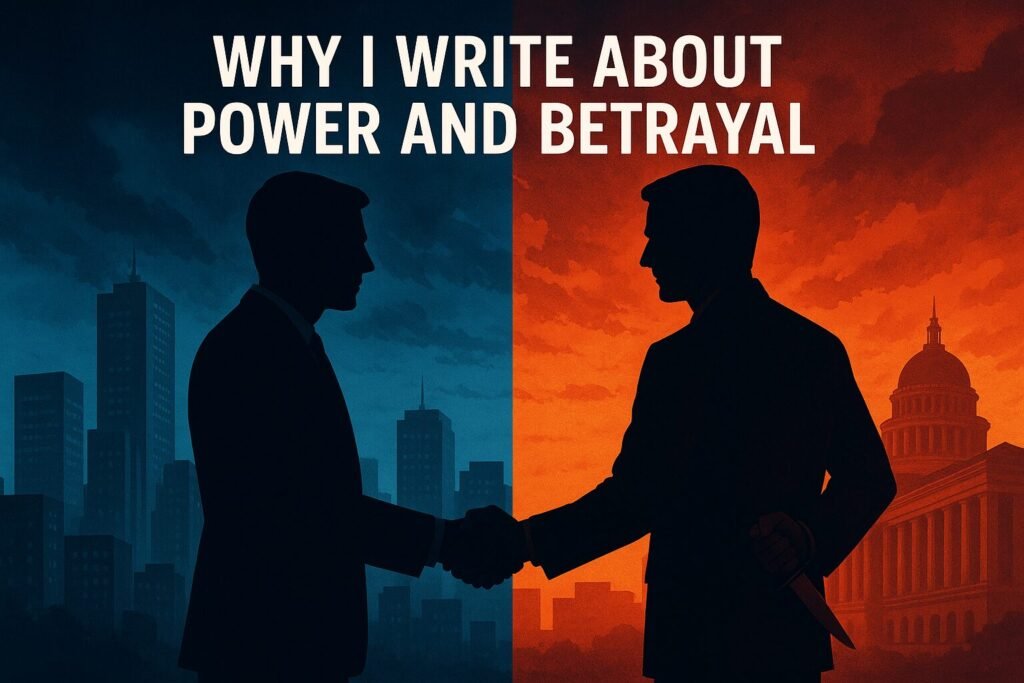
If you’ve spent any time looking at the stories I’m working on, you’ll probably notice a pattern: power, betrayal, and the dangerous dance between the two.
It’s a fair question—why do I keep coming back to those themes?
To me, it’s a bit like asking J.K. Rowling why she wrote about a wizard. Does she believe she can cast spells? Of course not. It was simply the world she wanted to explore. For me, the world I want to explore is one where power is constantly shifting hands, loyalties are tested, and betrayal is always one decision away.
The Influences That Shaped Me
I grew up with stories that thrived on those ideas. Tom Clancy’s Jack Ryan novels turned geopolitics into nail-biting chess matches. James Patterson delivered lean political thrillers that were as much about who you could trust as they were about catching the villain. TV shows like 24 and The West Wing showed me both sides of power—the brutal fight to keep it, and the compromises that come with holding it.
What stuck with me wasn’t just the explosions or plot twists—it was the people behind them. Presidents making impossible choices. Operatives abandoned by the very agencies they served. Staffers giving everything for a system that might betray them in the end. Those characters felt real because they reflected something universal: power always comes with a cost, and betrayal is never far behind.
Why Power and Betrayal Work
These themes aren’t just “thriller ingredients”—they’re part of being human. Everyone, at some point, has felt the sting of betrayal. Everyone’s seen power misused, whether on the world stage or in a much smaller corner of life. Writing about them lets me magnify those feelings and explore them in worlds that are larger than life.
That’s why in The Vale Protocols, Thomas Vale isn’t just up against faceless enemies in far-off cities. He’s wrestling with mistrust, the institutions that disowned him, and the deeper question of whether a man who’s been betrayed can still trust himself. Power and betrayal aren’t just plot devices in these books—they’re the heartbeat of the story.
The “What If” Question
When I sit down to write, I always start with what if…
- What if a trusted ally sells you out to the highest bidder?
- What if a government sacrifices one man to protect the many?
- What if betrayal doesn’t come from an enemy—but from a friend?
Those questions create tension before a single word hits the page. They give me the freedom to twist perspectives, shift the balance of power, or push things beyond reality with a bit of artistic licence. Sometimes betrayal is obvious. Sometimes it’s hidden until the very last page. And sometimes it’s not about who betrays you—but how you rebuild afterwards.
The Heart of It
At the end of the day, I don’t write about power and betrayal because they’re fashionable subjects or because political thrillers demand them. I write about them because they fascinate me. They expose who we really are—what we’ll protect, what we’ll sacrifice, and who we’ll trust when everything is on the line.
That’s what keeps me hooked as a reader, and that’s what I aim to deliver as a writer: stories that challenge, unsettle, and keep you turning the page long after you said you’d stop.
Want to dive deeper?
Head over to the homepage and explore my upcoming projects. From The Vale Protocols to other thrillers in the works, you’ll see how themes of power and betrayal run through them all.